Greatest living Americans: a 1922 poll

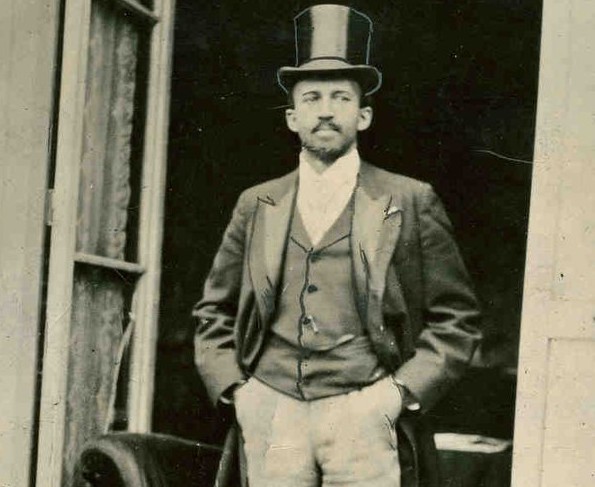
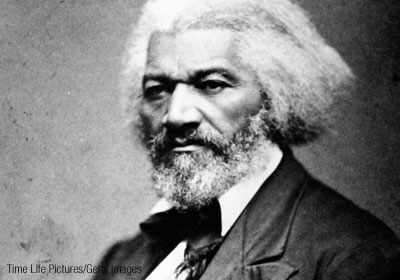
A 1922 New York Times list of the greatest living American men and women provides a fascinating window into the post-WW1 period. My students came up with their own top ten for 2011.

A version of this piece appeared in the Philadelphia Inquirer, June 20, 2011

A student in my American history class discovered two New York Times surveys published in 1922 listing, separately, the greatest living American women and men. In each case, a group of civic, academic and religious leaders were asked to submit their nominees.
This was not just another “best presidents” or “greatest weekend getaways” poll. As far as we could tell, the 1922 lists were unique in their time.

Continue reading “Greatest living Americans: a 1922 poll”

America’s never-ending tea party

Today’s tea partyers are not the first. In the 1920s, anti-prohibition “wets” invoked the 1773 event.

Philadelphia Inquirer – April 4, 2011

Today’s tea partyers are not the first to invoke the 1773 protest in their objections to expanding federal power. As one of my students (Liza Bergmann ’12) learned from old newspaper articles, the opponents of Prohibition also made reference to the Boston Tea Party.

Continue reading “America’s never-ending tea party”

Nation-building when it was the only option

The importance of the Freedmen’s Bureau, then and now.

What can we learn from a flawed, ambitious legacy?

Philadelphia Inquirer – February 28, 2011

Do we need Black History Month? The debate waxes and wanes with the approach and passage of each February. There are serious arguments to be made against the 35-year-old tradition, but from my vantage point as a teacher, the practice of paying extra attention to African American history during this month still has its merits.

Continue reading “Nation-building when it was the only option”

Constitutional love should not be blind

Unfortunately, an increasingly vocal group of Americans treat the Constitution as though it were a sacred document rather than a working blueprint of government designed to be amended as conditions change.

Reverence for the document can have a downside.

Philadelphia Inquirer – February 3, 2011

I am a big fan of the U.S. Constitution. I carry a copy of it in my back pocket — a compact edition courtesy of the National Constitution Center. My students carry copies of it, too, though they generally keep theirs in their backpacks.

File Photograph -This early draft of the U.S. Constitution was published by Philadelphia’s Evening Chronicle.

We spend several weeks every fall studying the document’s seven articles and the Bill of Rights. Afterward, we continue to look at various sections and paragraphs almost daily as other sources make reference to the Constitution. And we examine the later amendments as we reach their ratification dates in our chronological survey of American history.

It had never occurred to me that Americans’ devotion to their wonderfully spare and succinct blueprint for government might have a downside — until recently.

Continue reading “Constitutional love should not be blind”

A constitutional battle across the generations

What the 112th Congress could learn from Frederick Douglass.

The document’s admirers must contend with slavery

Philadelphia Inquirer – Jan. 13, 2011

Congress’ reading of the Constitution last week seemed like a fairly benign way to pander to the majority’s tea-party base. It wasn’t supposed to involve any debate. But House Democrats, adapting quickly to their new minority role, managed to find a way to take issue with the event.

It turned out that the Republican leadership had chosen to omit the Constitution’s references to slavery. Claiming “whitewashing,” some Democrats were able to score points in this bizarre channeling-the-ancestors contest, which has become a popular pursuit among Washington politicians and Supreme Court justices. Continue reading “A constitutional battle across the generations”

Thankful for ‘friendly assistance’

Data on poverty in Philadelphia in 1800 from the records of the city’s almshouse.

Philadelphia Inquirer – Jan. 3, 2011

This time of year many of us are able to enjoy a break from our labors, the company of relatives and friends, the chance to renew old ties, and much more food than we need. We may also pay a bit more attention than usual to those around us who struggle to maintain themselves and their families, but amid the relative plenty we feel less kinship with them than we should.

If my students are any indication, part of the problem our society faces in dealing with the gulf that separates the haves from the have-nots is a lack of appreciation for the impact the people we see over the holidays have on our social and economic status. We underestimate the degree to which our closest personal relationships buoy us up, especially when events conspire against us.

Continue reading “Thankful for ‘friendly assistance’”

Let’s keep the state in Penn State

State funding levels for Penn State have dropped to less than a tenth of their 1970s levels and further cuts seems likely. Should the university “go private”?

Philadelphia Inquirer, November 22, 2010

Pennsylvania State University dwarfs all the commonwealth’s other institutions of higher learning, public and private. According to the university’s own statistics, one out of every 127 American college-degree holders is a Penn State graduate!

The university has managed to thrive despite a steady decline in state funding. In the 1970s state support accounted for 60 to 70% of the total, but even before the recession hit two years ago, contributions from Harrisburg had fallen to only 11 percent of the school’s budget. Since then, the amount has dropped to 6 percent. And given the cost-cutting campaign promises made by Gov.-elect Tom Corbett, the trend seems destined to continue.

Continue reading “Let’s keep the state in Penn State”

These states were never easily united

USA 1 and USA 2 – Why the first one is still important

Sovereignty questions persist in our politics

Philadelphia Inquirer, November 3, 2010

When I ask my American history students to define the word state, they look at each other. Eventually, someone suggests province as a synonym. Some nods of agreement follow.

Their hesitation is understandable. Outside America, the word usually means “country.”

Continue reading “These states were never easily united”

In defense of the college “early decision” option

There are good reasons to consider the binding early decision option.

Philadelphia Inquirer – September 26, 2010

It’s that time of year again. High school seniors are deciding where they will apply to college, and for a sizable fraction the pivotal question is, Should I apply early?

Early application options vary by institution, but the one that generates the most debate at kitchen tables and in college counseling offices around the country is “early decision,” popularly known as ED.

Continue reading “In defense of the college “early decision” option”

Gender divisions in college

The dominance of girls in liberal arts college applicant pools has led to their being judged by a more stringent set of criteria than their male counterparts.

The rise of women undergraduates has been concentrated in liberal-arts schools.

Philadelphia Inquirer, September 8, 2010

By Grant Calder

For the past 20 years or so, women have earned the majority of bachelor’s degrees awarded at American institutions of higher learning. Today, they constitute almost 60 percent of the total undergraduate student body, and even that mark may be exceeded in the near future.

Continue reading “Gender divisions in college”