In wartime, a push for colleges

While studying the Civil War, my students were surprised to discover that among its many consequences were the founding and expansion of hundreds of colleges and universities.

Philadelphia Inquirer – April 21, 2013

While studying the Civil War, my students were surprised to discover that among its many consequences were the founding and expansion of hundreds of colleges and universities.

With Southern Democrats no longer in Congress following secession, Republicans easily passed the Morrill Land-Grant Act in 1862. Government land was granted to each state to be sold, and the moneys used to create endowments for the maintenance of colleges that would teach, among other things, agriculture and engineering in order to “promote the liberal and practical education of the industrial classes.”

The bill provided federal aid for a new, more inclusive vision of publicly supported higher education. Penn State, founded in 1855, became Pennsylvania’s land-grant college in 1863. Rutgers followed for New Jersey in 1864, and the University of Delaware was designated a land-grant college in 1867.

A host of black colleges emerged in the South after the war. Howard University, in Washington, began in 1866, like so many of its white counterparts, as a place to train clergymen but rapidly evolved into a university with a medical school and a law school. Freed from slavery by the war, a Georgian, William Sanders Scarborough, went on to become a classicist and later president of Wilberforce College in Ohio, one of the few historically black colleges founded before the war. More than a hundred so-called HBCUs continue to operate today, though many have struggled since desegregation, and a few are now majority white.

Former officers on both sides of the conflict joined college faculties. After the surrender, Robert E. Lee became president of Virginia’s Washington College, now known as Washington and Lee.

The federal budget leapt from 2 percent to 13 percent of gross domestic product during the war and fueled tremendous growth in Northern industry. Philadelphia textile mills supplied blankets and uniforms to the Union Army and, by the turn of the century, the city was the largest textile center in the country. A group of mill owners established the Philadelphia Textile School in 1884. It became a college in 1941, and was renamed Philadelphia University in 1999.

The second wife of Cornelius Vanderbilt, the New York shipping and railroad magnate, was a Southerner, and she persuaded her husband to take an interest in the former Confederacy. Vanderbilt paid for the building of Vanderbilt University (1873) in Nashville.

The most famous historically black women’s college, Spelman (1881) in Atlanta, was funded in part by John D. Rockefeller, the oil baron, who built his first refinery during the war. Spelman was named in honor of Rockefeller’s wife and her parents, who had been active in the abolitionist movement.

Today the United States is the world leader in higher education, with about 4,500 degree-granting institutions. Learning more about where these colleges and universities came from, and how they have evolved, might help students look beyond rankings and name recognition and take a broader view of their college options.

PSU figures defy gravity

The Penn State scandal won’t hurt admissions. It might even help.

Philadelphia Inquirer – September 5, 2012

Jerry Sandusky’s arrest and the subsequent firing of coach Joe Paterno and university president Graham B. Spanier last fall must have precipitated some hurried recalculations in the Penn State admissions office.

Most colleges and universities accept more students than they have room for based on educated guesses about the share of those admitted that will actually enroll. Ideally, they end up with the number of students they budgeted for. Too few students, and the college runs at a deficit; too many, and classrooms and dorms overflow.

Generally, the previous year’s figures are the best guide to the next cycle. But in the wake of the Sandusky scandal, who knew what would happen at Penn State?  Continue reading “PSU figures defy gravity”

Colleges adapt to marketplace

Despite the presence of price tags in the neighborhood of $60,000 per year, competition is alive and well in the world of higher education.

Philadelphia Inquirer – February 1, 2012

In January and February, a number of colleges send e-mail to counselors with headings such as “Scholarships still available at – University” and “We’ve extended our deadline.” The schools generating these notices are well-established, often ones our students have attended over the years. It’s not that they can’t fill seats. They’re hoping to attract well-qualified applicants who may have gotten a late start on the application process or been disappointed in the early fall rounds. Continue reading “Colleges adapt to marketplace”

Let’s keep the state in Penn State

State funding levels for Penn State have dropped to less than a tenth of their 1970s levels and further cuts seems likely. Should the university “go private”?

Philadelphia Inquirer, November 22, 2010

Pennsylvania State University dwarfs all the commonwealth’s other institutions of higher learning, public and private. According to the university’s own statistics, one out of every 127 American college-degree holders is a Penn State graduate!

The university has managed to thrive despite a steady decline in state funding. In the 1970s state support accounted for 60 to 70% of the total, but even before the recession hit two years ago, contributions from Harrisburg had fallen to only 11 percent of the school’s budget. Since then, the amount has dropped to 6 percent. And given the cost-cutting campaign promises made by Gov.-elect Tom Corbett, the trend seems destined to continue.

Continue reading “Let’s keep the state in Penn State”

In defense of the college “early decision” option

There are good reasons to consider the binding early decision option.

Philadelphia Inquirer – September 26, 2010

It’s that time of year again. High school seniors are deciding where they will apply to college, and for a sizable fraction the pivotal question is, Should I apply early?

Early application options vary by institution, but the one that generates the most debate at kitchen tables and in college counseling offices around the country is “early decision,” popularly known as ED.

Continue reading “In defense of the college “early decision” option”

Gender divisions in college

The dominance of girls in liberal arts college applicant pools has led to their being judged by a more stringent set of criteria than their male counterparts.

The rise of women undergraduates has been concentrated in liberal-arts schools.

Philadelphia Inquirer, September 8, 2010

By Grant Calder

For the past 20 years or so, women have earned the majority of bachelor’s degrees awarded at American institutions of higher learning. Today, they constitute almost 60 percent of the total undergraduate student body, and even that mark may be exceeded in the near future.

Continue reading “Gender divisions in college”

College isn’t common stock

A recently released study graded institutions of higher education by “return on investment.” But are these numbers meaningful?

Philadelphia Inquirer, August, 3 2010

A recently released study graded institutions of higher education by “return on investment,” taking the college rankings game to a new low.

Return on investment, or “ROI,” is calculated by dividing an investment’s proceeds by its cost, yielding a percentage or ratio. Sounds reasonable: How nice for high school students to be able to compare, in dollars and cents, the long-term payoffs of investments in colleges they’re applying to.

Continue reading “College isn’t common stock”

Harvard-trained murderer?

Loose use of Ivy League labels is a strange and telling American habit.

Loose use of Ivy League labels is a strange and telling American habit.

a version of this article appeared in the Philadelphia Inquirer – April 9, 2010

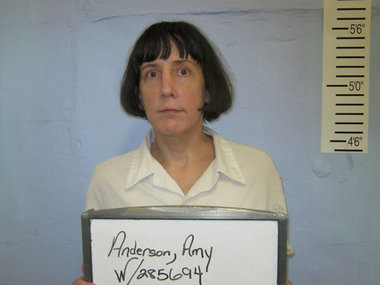
A couple of months ago Amy Bishop, an assistant professor at the University of Alabama in Huntsville allegedly opened fire on her colleagues and killed three of them in the middle of a department meeting. The event was reported extensively in the press. I recently happened upon a mention of the case and was surprised and disappointed to see her referred to, yet again, as a “Harvard-educated biologist.”

Continue reading “Harvard-trained murderer?”

Students should consider range of colleges these days

the impact of the economic downturn on college admissions in the spring of 2009

Philadelphia Inquirer – February 5th, 2009

In the college counseling office at my school, we sometimes, I imagine, feel the way stock traders do these days. The numbers we keep track of also have been affected by the subprime meltdown and credit freeze. But drops in the number of college applications are not our problem; they are going up, especially at public universities.

Continue reading “Students should consider range of colleges these days”

Ignore the statistics: It’s a great time to be applying to college

applying to colleges in the spring of 2008, pre-downturn

Philadelphia Inquirer – March, 2008

“It’s a Great Time to Be Applying to College!” apparently isn’t the kind of headline that captures readers’ attention, although it is true. The annual batch of articles appearing these days in the popular press on the topic of college admissions is much more likely to contain titles such as “Top Colleges Reject 90% of Their Applicants!” For the most part they focus on the staggering numbers of applications some colleges are receiving, the steadily climbing GPAs and standardized test scores of their applicants and the stories of the insane lengths to which students, and often their parents, will go to in order to improve their standings in the pools. The latter may include, for example, paying a consultant as much as it costs to attend an expensive private college for an entire year. The statistics may be accurate as far as they go but they mask some much more important points.

Continue reading “Ignore the statistics: It’s a great time to be applying to college”