For today’s students, a focus on social history

Results of an informal important-historical-figures poll conducted on the first day of the American history class.

Philadelphia Inquirer – October 10, 2016

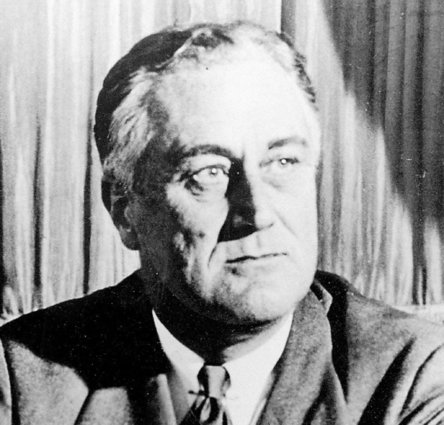
We used to call it “presidents and wars.” Until the end of the 20th century, American history was generally presented in schools as a succession of conflicts with a focus on the leaders who guided us through them: Washington and the Revolution, Lincoln and Civil War, Wilson and the Great War, FDR and WW2.

Things became a little trickier after Vietnam and LBJ and Nixon. Faith in presidents, in America’s military. and in “the establishment” was shaken. Partly as a result of this shift, other sorts of history began to receive more attention.

On the first day of school this year, I asked each of my 11th graders to list three or four historical figures they felt deserved a central place in any high school American history course (as they were about to begin ours) and why.

All born in 1999 or 2000, they were toddlers on 9/11. Although the United States has been engaged in military conflicts in Afghanistan and the Middle East almost all of their lives, they do not view their country’s history primarily in terms of presidents and wars.

Twenty percent of the figures they listed were women. Most were abolitionists or women’s and civil rights activists, among them Susan B. Anthony, Rosa Parks, Alice Paul, and Harriet Tubman. Almost exactly the same fraction of the total were African Americans and most of that group were also seen by the students as civil rights activists, even if they were also scholars, athletes, or writers. They included W.E.B. DuBois, Langston Hughes, Jackie Robinson, and Malcolm X.

To these 21st-century teenagers, the most important history is social history. They would have trouble coming up with the names of Civil War battles other than Gettysburg, but they can easily recall several cities in which large-scale protests have followed the shooting of African American men by police in the past two years. And they are witnessing a presidential election campaign in which for the first time a major party ticket is led by a woman. When they think about American history they focus on the struggles of oppressed groups within our society to gain recognition and equal rights.

One of the first documents we read in September was the Massachusetts Body of Liberties (1641), an early collection of rights and laws. The second of these liberties reads, “Every person within this jurisdiction, whether inhabitant or foreigner, shall enjoy the same justice and law, that is general for the [colony].” The students selected many figures who spent their lives fighting to make this principle of equality before the law a reality, and they see those battles still going on across the country.

Among their top three, Abraham Lincoln and Barack Obama tied for second. Obama’s prominence is a reminder that he was elected president when these students were in the third grade. He is the only president they have known. That he and the president who led the Union through the war that ended slavery appear beside each other is fitting. Obama recognized the tie himself when in 2009 he chose to take the oath of office on Lincoln’s bible.

The clear first place went to Martin Luther King Jr. More than half of the students (most of them white) wrote his name and many assumed they did not need to say why.

In this deeply divided political and social climate, King’s words from his Letter from a Birmingham Jail could hardly be more relevant, “The question is not whether we will be extremists, but what kind of extremists we will be. Will we be extremists for hate or for love? Will we be extremists for the preservation of injustice or for the extension of justice.”
 

Featured photo by CHARLES FOX / Inquirer staff photographer – The Martin Luther King Jr. Memorial in Washington, D.C.

Lincoln and FDR: Favorite lessons from American history as taught in China

A look at what Chinese students learn about American history from their textbooks and why it matters.

August 29, 2016 – Philadelphia Inquirer

What figures in American history do you find the most appealing and why? That’s the first question I’m going to ask my 11th-grade American history students this year. We will share our lists and talk about where and why we overlap, or don’t. Mine will include four people who lived in Philadelphia for some or all of their lives: James Forten, Sarah Grimke, Thomas Paine, and Ben Franklin.

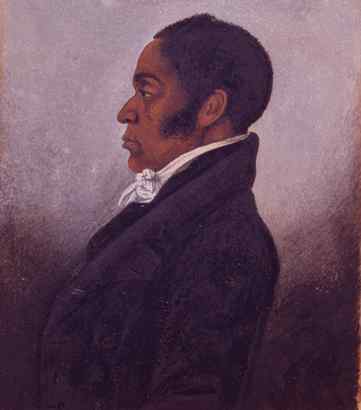
The lists will reveal much about us individually, about our era, and about how our historical views are powerfully shaped by the present. James Forten, an African American Revolutionary War veteran, abolitionist, and business leader, for example, has received much more attention in the 21st century than he did in the 20th.

Most of the students in my class are Americans from a variety of religious and ethnic backgrounds, but a couple of them are from China. And the second question I’m going to ask the class is, what figures in American history they think the Chinese find most appealing and why?

It occurred to me that the Chinese list might include Eugene Debs, the great American socialist who ran for president five times and received 6 percent of the vote in the election of 1912. By 1922, he was mentioned in a major survey of greatest living Americans. And W.E.B. DuBois, civil rights activist, scholar, and in his later years a communist, whose 91st birthday was celebrated as a national holiday in China in 1959.

I was wrong. How do I know?

Because last spring, a Chinese student in my class analyzed the American history chapters in a few of the textbooks read by millions of Chinese students in their schools. She translated the chapters and showed us that two figures stand out most notably in the Chinese telling: Abraham Lincoln and Franklin Delano Roosevelt. No mention of Debs or DuBois.

In the Chinese textbooks, Lincoln rallied the forces of good (the Union) in a bloody civil war against a relatively small class of Southern planters, rulers of a corrupt and reactionary social and economic system based on slave labor. Roosevelt’s economic reforms and relief programs saved the republic from the greed of the capitalists, whose excesses had caused the Depression and brought the country to its knees.

My student explained that she thought the authors were interested in drawing lessons from the past and in making clear distinctions between what they see as its heroes and villains. Lincoln was a man of the people who raised a citizen army against the martial aristocracy of the Old South and ended slavery. Roosevelt was a charismatic, visionary socialist leader rescuing the country from economic collapse.

The Chinese interest in American history is a reflection of their belief in history’s importance in shaping all people and cultures, including their own. To compete with us in the present, they want to know about our past. And they clearly see our past through the lens of their own history, their great civil war and the communist party led government that emerged from it.

We should keep that in mind as we attempt to negotiate with China on everything from trade relations to climate change to control of the South China Sea.

Americans have the great privilege (and advantage) of hosting international students from around the globe in our high schools, more than 90,000 all told. We should make every effort to maximize the benefits of this extraordinary opportunity to learn from them and about them and their histories and cultures, as they do about ours.

Echoes of Debs in Trump and Sanders campaigns

A century later Trump and Sanders echo socialist leader and five-time presidential candidate Eugene Debs.

June 1, 2016 – Philadelphia Inquirer

In 1918, Eugene Debs, the leader of the Socialist Party, spoke to a group of workers in Canton, Ohio. When we studied this speech, the students in my American history class were surprised by the parallels to the current presidential primaries.

Debs had no patience for Republicans or Democrats, whom he saw as “the political twins of the master class.” Presidential contenders Donald Trump and Bernie Sanders seem to be tapping into a similar strain of antiestablishment anger.

When President Woodrow Wilson, a Democrat, asked Congress to declare war against Germany to “make the world safe for democracy,” Debs wondered why America’s industrial laborers should spill their blood on the battlefields of France when they enjoyed none of benefits of democracy at home.

He also had harsh words for Teddy Roosevelt, the Republican former president. Debs reminded his listeners that only a few years earlier, Roosevelt had visited Germany and been “wined and dined” by the kaiser, the same person the press now dubbed the “Beast of Berlin.” “According to accounts published in the American newspapers,” Roosevelt and the kaiser were “on the most familiar terms,” Debs said. “They were hilariously intimate with each other and slapped each other on the back.” And now, he continued, “they brand us as disloyalists and traitors.”

Like Debs, Trump and Sanders both rail about the failures of Republican and Democratic political leadership. Trump knows his appeal has little to do with his Republican Party affiliation, and Sanders calls himself a democratic socialist.

Trump has also battled with the media throughout his campaign. Sounding the same notes, Debs described “what a capacity [the press] had for lying.” We “were not born yesterday,” he said, and the workers knew enough “to believe exactly the opposite of what they read” in the newspapers.

Sanders has described “the business model of Wall Street” as “fraud” and said, “these guys drove us into the worst economic downturn in the modern history of America.” Debs blasted the “Wall Street gentry” who “have wrung their countless millions from your sweat, your agony, and your life’s blood.”

But the differences are important too. Most of those to whom Debs was speaking were poor, immigrant laborers. Debs strongly encouraged them to make common cause with their counterparts in Europe and around the world. Trump’s backers are often nativists, imagining that their problems can be solved by keeping Mexicans, Muslims, and others out of the country. Sanders, like Trump, is a vocal critic of free trade. The younger, college-educated voters who back him may not support building a wall along our southern border, but they also don’t particularly identify with the people it would be designed to keep out, or with the millions of them already living in the United States.

Fractures of the sort we are witnessing today within the Democratic and Republican Parties do not pose a major problem for the leadership. The “political twins of the master class,” as Debs described them, will survive the current election cycle, as long as “the people” remain divided. That is the lesson Debs has to offer.

Through the tumultuous century since his speech to workers at Canton, the two major parties have retained control of the political system. Far from being on the verge of collapse, they may well share power for the next hundred years.

Blackstone’s warning

“It is better that 10 guilty persons escape than that one innocent suffer.” Does this statement ring true to you? If so, you are probably over 40.

December 10th, 2013 – Philadelphia Inquirer

“It is better that 10 guilty persons escape than that one innocent suffer.”

Does this statement ring true to you? If so, you are probably over 40. My students, having grown up in a post-Columbine, post-9/11, post-Virginia Tech era, hesitate when I introduce them to the 1765 formulation of British jurist William Blackstone.

It’s no surprise that today’s teens have a harder time accepting Blackstone’s statement than I did at their age. For them, danger to their own well-being and to the stability of the community seems to come primarily from lone gunmen and small groups of extremists. They are more likely to worry about unstable or lawless individuals on the loose and to view the government as their protector.

A half-century ago, high schoolers were instructed to assemble below ground as practice for a possible nuclear strike. Now they head to the basements in preparation for a terrorist attack and are told to lock themselves in their classrooms in the case of a threat from an armed intruder.

In the 1960s and ’70s, many Americans, especially younger ones, saw government as the primary menace to their personal freedom and safety. In 1970, college kids protesting government policies were shot at Kent State and Jackson State, not by deranged fellow students, but by National Guardsmen and police, respectively. This was also a period during which public support for the death penalty, carried out by the state, reached an historic low. Executions were temporarily halted between 1967 and 1977.

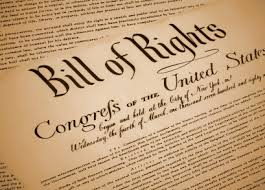
Some of the sections of the Bill of Rights, ratified in 1791, are already familiar to my students when we begin studying them. They know about the freedoms of speech, press, and assembly, and they are familiar with expressions such as “no double jeopardy” and “pleading the Fifth.” But it doesn’t immediately occur to them that these are also limitations on government power designed to prevent citizens from being silenced, or repeatedly dragged into court, or forced to confess, or imprisoned without trial, or denied the benefit of counsel. Blackstone’s dictum underpins our legal system. Ben Franklin referred to it approvingly.

In weakening our devotion to this principle, advances in technology have certainly played a role. A few people can do a lot more damage in our time than they could in the 18th century – witness the attacks of Sept. 11. But technology also makes it easier to extend government power. Drones – computer-guided, unmanned aircraft – have allowed the United States to kill suspected terrorists (including at least one U.S. citizen) remotely. Earlier this year, the Justice Department secretly seized electronic phone records from the Associated Press. The National Security Agency has been collecting millions of personal e-mail contact lists.

These days we don’t have much sympathy for leakers, whistle-blowers, or investigative journalists. And that’s a problem, because the executive branch is notably cavalier about our constitutional rights. There is no doubt that the threats from which the NSA hopes to protect us are real, but so is the ever-present tendency toward government overreach.

Blackstone’s observation remains at least as important now as it was in the 18th century. Whenever an innocent person suffers at the hands of the system we have created, we all do.

The execution standard

As the oldest constitutional democracy in the world, the United States is often criticized for continuing to carry out state-sanctioned executions. Three hundred years ago Pennsylvania had fewer capital laws than any European state.

October 9, 2013 – Philadelphia Inquirer

As the oldest constitutional democracy in the world, the United States is often criticized for continuing to carry out state-sanctioned executions. Over the past couple of generations, every European country, with the exception of Belarus, has outlawed the death penalty. The principle is enshrined in the Charter of Fundamental Rights of the European Union.
But we have not always been the throwbacks. In fact, in the 17th and 18th centuries, the English colonies had far fewer capital laws than England and other European states.

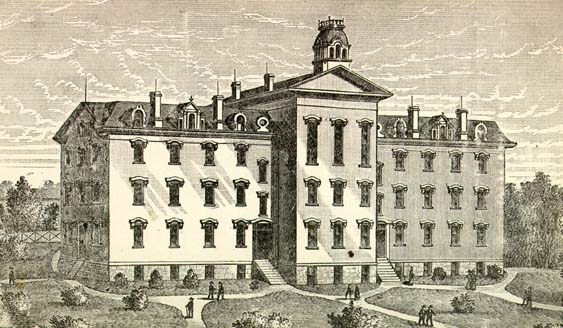
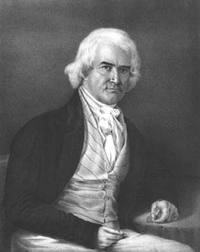
My students have been reading the Massachusetts Body of Liberties, written in 1641 as a guide for the colony’s General Court. It included 12 capital laws. Religious crimes such as witchcraft and blasphemy came first, then murder (three different types), then sex crimes (rape was not among them), followed by kidnapping, bearing false witness in a capital case, and treason. That seemed like a lot, until we discovered that the list of capital crimes back in the old country was more than 10 times as long.

The Puritans were certainly not free thinkers. They harassed and tortured religious and political dissenters, and they were perfectly willing to execute criminals in capital cases. But they radically reduced the number of offenses punishable by death under English law.

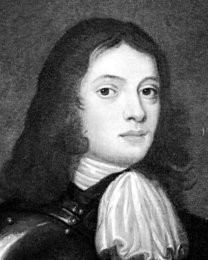
Forty years later, William Penn established a colony in which the trend continued. Early-18th-century Pennsylvania statutes included only two crimes punishable by death: murder and treason. Quakers’ pacifism certainly contributed to their lack of appetite for capital punishment, as did their belief that there is that of God in every human being. Pennsylvania set the standard for the English colonies and for the rest of the European world.

Since then, in America, the tendency has been toward more capital laws. Even Penn’s proprietary colony added more in the mid-1700s. None of the students guessed that one of those later capital crimes was counterfeiting. At the time, the local economy was entirely dependent on local paper currency, and the danger posed by counterfeiting was so great that Penn’s successors made the production of fake bills punishable by death.

Across the country, a range of transgressions, from inciting slave revolts, to horse and cattle stealing, to rape, to kidnapping, to high-level drug trafficking, have all been, or remain, punishable by death. Federal statutes currently list a number of capital offenses, most falling under the overall definition of treason.

In recent decades, the Supreme Court has generally moved to restrict the crimes for which a person may be sentenced to death. In some cases the states have responded by enacting death-penalty statutes that narrow the definition of a particular capital offense. One wonders whether their goal is simply to come up with justifications for preserving the state’s power to execute its citizens. Shouldn’t we be looking for reasons not to take lives?

Thousands of Americans have been put to death since the founding of our republic, and the documents and data we study in our American history course provide little evidence that the threat of capital punishment has acted as an effective deterrent or that it has made the rest of us safer. It is also difficult to see how the government-sanctioned killing of citizens – even for particularly heinous crimes and even when the evidence is overwhelming – makes us a more just, more humane, or more ethical society.

Of the 18 states in which the death penalty has been abolished, Michigan was the first, in 1846, Maryland the most recent, in 2013. Perhaps by the end of this century, the remaining 32 states and the federal government will turn again in the direction Penn pointed us and leave capital punishment behind for good.

Long before King, a Philadelphia voice

Philadelphian James Forten was leading the fight for equal rights 200 years ago with the publication of his “Letters from a Man of Color” in 1813.

Philadelphia Inquirer – September 1, 2013

Anniversaries of historical events, such as last week’s observance of the 1963 March on Washington, get us thinking about the past and present. They prod us to reflect on the choices we make, the values we espouse, the dreams that have been realized, and the ones that have not. As it happens, 2013 is the 200th anniversary of another important moment in the struggle for equal rights. Continue reading “Long before King, a Philadelphia voice”

In wartime, a push for colleges

While studying the Civil War, my students were surprised to discover that among its many consequences were the founding and expansion of hundreds of colleges and universities.

Philadelphia Inquirer – April 21, 2013

While studying the Civil War, my students were surprised to discover that among its many consequences were the founding and expansion of hundreds of colleges and universities.

With Southern Democrats no longer in Congress following secession, Republicans easily passed the Morrill Land-Grant Act in 1862. Government land was granted to each state to be sold, and the moneys used to create endowments for the maintenance of colleges that would teach, among other things, agriculture and engineering in order to “promote the liberal and practical education of the industrial classes.”

The bill provided federal aid for a new, more inclusive vision of publicly supported higher education. Penn State, founded in 1855, became Pennsylvania’s land-grant college in 1863. Rutgers followed for New Jersey in 1864, and the University of Delaware was designated a land-grant college in 1867.

A host of black colleges emerged in the South after the war. Howard University, in Washington, began in 1866, like so many of its white counterparts, as a place to train clergymen but rapidly evolved into a university with a medical school and a law school. Freed from slavery by the war, a Georgian, William Sanders Scarborough, went on to become a classicist and later president of Wilberforce College in Ohio, one of the few historically black colleges founded before the war. More than a hundred so-called HBCUs continue to operate today, though many have struggled since desegregation, and a few are now majority white.

Former officers on both sides of the conflict joined college faculties. After the surrender, Robert E. Lee became president of Virginia’s Washington College, now known as Washington and Lee.

The federal budget leapt from 2 percent to 13 percent of gross domestic product during the war and fueled tremendous growth in Northern industry. Philadelphia textile mills supplied blankets and uniforms to the Union Army and, by the turn of the century, the city was the largest textile center in the country. A group of mill owners established the Philadelphia Textile School in 1884. It became a college in 1941, and was renamed Philadelphia University in 1999.

The second wife of Cornelius Vanderbilt, the New York shipping and railroad magnate, was a Southerner, and she persuaded her husband to take an interest in the former Confederacy. Vanderbilt paid for the building of Vanderbilt University (1873) in Nashville.

The most famous historically black women’s college, Spelman (1881) in Atlanta, was funded in part by John D. Rockefeller, the oil baron, who built his first refinery during the war. Spelman was named in honor of Rockefeller’s wife and her parents, who had been active in the abolitionist movement.

Today the United States is the world leader in higher education, with about 4,500 degree-granting institutions. Learning more about where these colleges and universities came from, and how they have evolved, might help students look beyond rankings and name recognition and take a broader view of their college options.

A shortage of greatness

George M. Dallas was Vice President of the United States from 1845-49. No other Philadelphian came as close to the White House.

Philadelphia Inquirer – March 29, 2013

Inquirer columnist Karen Heller wrote recently on the revival of interest in Thaddeus Stevens, the Pennsylvania congressman who led the Radical Republicans during and after the Civil War. “For a state with few legends among our elected politicians,” she noted, “Stevens is a giant.”

My students decided she was right. Other than Stevens, whose legendary status is well deserved, not many names from Pennsylvania’s political past come to mind. And we wondered why.

Pennsylvania played a pivotal role in early American history. In 1776, Philadelphia was the largest city in British North America. It was the headquarters of the Confederation for much of the War for Independence and became the second capital of the United States. Philadelphia was also a center, arguably the center, of trade, banking, law, and medicine.

The Declaration of Independence, the Articles of Confederation, and the Constitution were written in Philadelphia. Virtually all of the great American thinkers and leaders of the day walked its streets. Philadelphia attracted extraordinary talent from here and abroad – Ben Franklin from Boston, Thomas Paine from London, and Stephen Girard, the richest American of his generation, from France.

Why, especially in those early decades of the republic, did neither the city nor the state produce any presidents, major-party candidates for president, or even vice presidents? Philadelphia was full of well-educated, civic-minded citizens with the time and resources to serve.

Admittedly, the so-called Virginia dynasty (Washington, Jefferson, Madison, and Monroe) didn’t leave much room for other would-be chief executives, but Pennsylvania wasn’t even in the game. Massachusetts produced two early presidents, the Adamses, as well as Elbridge Gerry, a vice president. From New York came two major-party presidential candidates and two vice presidents. South Carolina also contributed two presidential candidates.

We did find a couple of Philadelphians who ran for national office in those days, among them Jared Ingersoll in 1812 and Richard Rush in 1820, but only for the vice presidency, and none was elected.

A few appear in the record among the advisers and secretaries of the early presidents, and the class decided this behind-the-scenes style fit the “Quaker city.”

The influence of William Penn and other members of the Religious Society of Friends helped make Philadelphia the most progressive and diverse community in the colonies. But Quakers also held some radical views for the times. They refused to support or participate in war and took an early stand against slavery, effectively removing themselves from direct involvement in presidential politics.

Philadelphians’ reputation for saying what’s on their minds may owe something to the Friends. Quakers have long been known for their commitment to speaking the truth, and though they have often been respected for this trait, it hasn’t always made them popular, or electable.

One local citizen, not a Quaker, did get within a heartbeat of the presidency. In 1845, George M. Dallas became the 11th vice president of the United States. No one in the class had ever heard of him. Ironically, he was a bitter political rival of James Buchanan, the only Pennsylvanian (from Lancaster) to become president. In her column, Heller described Buchanan as “arguably Pennsylvania’s worst elected official.” Dallas might well have agreed.

As the Philadelphian who came closest to the White House, and who also served as mayor of the city and as a U.S. senator, why not include George Dallas on the list of Pennsylvania political legends? There’s room.

Submarines and Drones

Woodrow Wilson’s 1917 description of submarine warfare reminded the class of the current debate over the use of drones to target terrorists.

Philadelphia Inquirer – February 28, 2013

A lesson on Woodrow Wilson´s war message to Congress led to a discussion about drone warfare in the 21st century.Reading Woodrow Wilson’s 1917 war message to Congress in our American history class reminded my students and me of the ongoing debate over the use of drones by the American government to target suspected terrorists.
In the early 20th century, submarines were useful primarily as hit-and-run weapons. They would sneak up on much bigger ships and hope to remain undetected long enough to launch a torpedo or two and get away. In his speech to Congress, the president expressed his outrage at the German government’s policy of using submarines to sink any vessels (many carried passengers and cargo) headed for British or other Allied ports, labeling it “warfare against mankind.” Continue reading “Submarines and Drones”

Painstaking steps forward

The 13th amendment abolishing slavery was ratified in 1865 but a generation later most blacks in the South were not free.

Philadelphia Inquirer – January 31, 2013

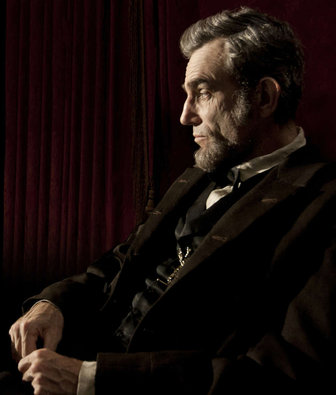
On this last day of January in 1865, the House of Representatives passed a proposal for a constitutional ban on slavery. In Steven Spielberg’s latest film, Abraham Lincoln is the consummate politician who, in the midst of a great war and facing determined resistance in Congress, made it happen.

Daniel Day-Lewis in Steven Spielberg´s film "Lincoln."

But before we join the “Why can’t President Obama be more like Lincoln?” chorus, it’s worth noting that the 13th Amendment was less a great leap forward than a single conflicted step.


Daniel Day Lewis in Steven Spielberg’s “Lincoln.”

Continue reading “Painstaking steps forward”