August 29, 2016 – Philadelphia Inquirer
What figures in American history do you find the most appealing and why? That’s the first question I’m going to ask my 11th-grade American history students this year. We will share our lists and talk about where and why we overlap, or don’t. Mine will include four people who lived in Philadelphia for some or all of their lives: James Forten, Sarah Grimke, Thomas Paine, and Ben Franklin.
The lists will reveal much about us individually, about our era, and about how our historical views are powerfully shaped by the present. James Forten, an African American Revolutionary War veteran, abolitionist, and business leader, for example, has received much more attention in the 21st century than he did in the 20th.
It occurred to me that the Chinese list might include Eugene Debs, the great American socialist who ran for president five times and received 6 percent of the vote in the election of 1912. By 1922, he was mentioned in a major survey of greatest living Americans. And W.E.B. DuBois, civil rights activist, scholar, and in his later years a communist, whose 91st birthday was celebrated as a national holiday in China in 1959.
I was wrong. How do I know?
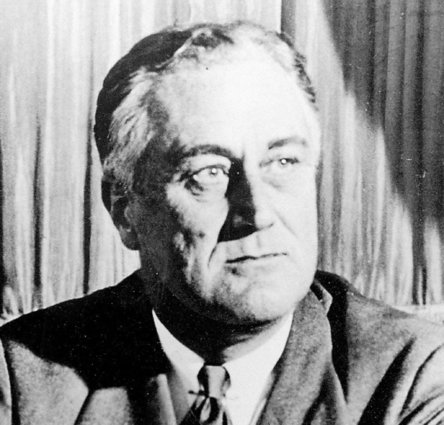
Because last spring, a Chinese student in my class analyzed the American history chapters in a few of the textbooks read by millions of Chinese students in their schools. She translated the chapters and showed us that two figures stand out most notably in the Chinese telling: Abraham Lincoln and Franklin Delano Roosevelt. No mention of Debs or DuBois.
In the Chinese textbooks, Lincoln rallied the forces of good (the Union) in a bloody civil war against a relatively small class of Southern planters, rulers of a corrupt and reactionary social and economic system based on slave labor. Roosevelt’s economic reforms and relief programs saved the republic from the greed of the capitalists, whose excesses had caused the Depression and brought the country to its knees.
My student explained that she thought the authors were interested in drawing lessons from the past and in making clear distinctions between what they see as its heroes and villains. Lincoln was a man of the people who raised a citizen army against the martial aristocracy of the Old South and ended slavery. Roosevelt was a charismatic, visionary socialist leader rescuing the country from economic collapse.
The Chinese interest in American history is a reflection of their belief in history’s importance in shaping all people and cultures, including their own. To compete with us in the present, they want to know about our past. And they clearly see our past through the lens of their own history, their great civil war and the communist party led government that emerged from it.
We should keep that in mind as we attempt to negotiate with China on everything from trade relations to climate change to control of the South China Sea.
Americans have the great privilege (and advantage) of hosting international students from around the globe in our high schools, more than 90,000 all told. We should make every effort to maximize the benefits of this extraordinary opportunity to learn from them and about them and their histories and cultures, as they do about ours.