College isn’t common stock

A recently released study graded institutions of higher education by “return on investment.” But are these numbers meaningful?

Philadelphia Inquirer, August, 3 2010

A recently released study graded institutions of higher education by “return on investment,” taking the college rankings game to a new low.

Return on investment, or “ROI,” is calculated by dividing an investment’s proceeds by its cost, yielding a percentage or ratio. Sounds reasonable: How nice for high school students to be able to compare, in dollars and cents, the long-term payoffs of investments in colleges they’re applying to.

Continue reading “College isn’t common stock”

Beware encroaching government powers

In 1813 in the midst of a war, Pennsylvania considered legislation that would have virtually reinstituted slavery in the Commonwealth. We still exhibit these reactionary tendencies in times of crisis. Witness sb1070, Arizona’s new law.

Philadelphia Inquirer, July 4th, 2010

JOHN OVERMYER

‘It is a well known fact, that black people, upon certain days of publick jubilee, dare not be seen after twelve o’clock in the day . . . I allude particularly to the Fourth of July!”

Continue reading “Beware encroaching government powers”

Giving disaster a name

“The Great Gulf Oil Disaster of 2010”

What we call the oil spill – and our response to it – make a difference.

A version of this piece appeared in the Philadelphia Inquirer – June 10, 2010

My students generally enjoy discussing current events, but they have been noticeably subdued when talk has turned to the expanding pool of oil in the Gulf. They get tired of looking helplessly at satellite images and pictures of oil-soaked birds. They want to do something.

Continue reading “Giving disaster a name”

Sailing solo: my tenth graders’ take on Jessica Watson’s voyage

A 16 year old sails around the world. Does it matter that she’s a girl?

A 16 old Australian named Jessica Watson recently completed an around-the-world solo sailing voyage. Apparently, there has been some grumbling from certain quarters about her route not exactly meeting the official circumnavigational standards, but no one can deny that she is a tough kid.

Continue reading “Sailing solo: my tenth graders’ take on Jessica Watson’s voyage”

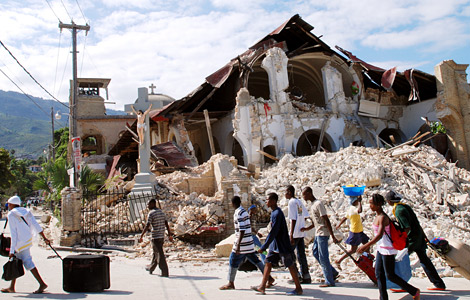
U.S. interest in Haiti isn’t selfless

Students consider the ramifications of Haiti becoming a failed state.

Philadelphia Inquirer – May 6, 2010

Michelle Obama’s trip to Haiti last month added another high-profile figure to an informal list my students and I have been keeping of important American visitors to the island nation.

Hillary Clinton arrived in Port-au-Prince only days after the earthquake hit. Since then, Bill Clinton has flown down in the company of George W. Bush. The secretary of state, two former presidents, and the first lady, among others, add up to a lot of top brass.

Continue reading “U.S. interest in Haiti isn’t selfless”

Harvard-trained murderer?

Loose use of Ivy League labels is a strange and telling American habit.

Loose use of Ivy League labels is a strange and telling American habit.

a version of this article appeared in the Philadelphia Inquirer – April 9, 2010

A couple of months ago Amy Bishop, an assistant professor at the University of Alabama in Huntsville allegedly opened fire on her colleagues and killed three of them in the middle of a department meeting. The event was reported extensively in the press. I recently happened upon a mention of the case and was surprised and disappointed to see her referred to, yet again, as a “Harvard-educated biologist.”

Continue reading “Harvard-trained murderer?”

Remember the Grimké sisters

Profiles of three extraordinary 19th century women with Philadelphia ties

In Women’s History Month, it is time to celebrate the contributions of some courageous individuals.

Philadephia Inquirer March 15, 2010

For the first time in history, women make up more than half the American workforce. They already constitute almost 60 percent of college students and a solid majority of degree-earners in the last couple of decades. Yet in most high school history courses, women remain woefully underrepresented.

Some claim this simply reflects reality: Women played a less visible role in past generations, they say — a regrettable result of their oppression by a male-dominated society — but what can be done about it now?

Continue reading “Remember the Grimké sisters”

An unsporting plot indeed

a lesson from 1938 on the rules of engagement in the 21st century

The rules of international conduct and conflict can seem absurd. But what’s the alternative?

Philadelphia Inquirer, February 26, 2010

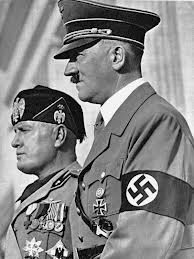
The article headline on a page of the Times of London from 1969 read “Plan to kill Hitler was ‘unsporting.’ ”

My students and I were using the newspaper’s online archive to research African independence movements. Next to a piece on Namibia, we found this one. The title provoked exactly the reaction its author had likely intended. Someone said, “Unsporting? Is that a joke?”

Continue reading “An unsporting plot indeed”

Two debates over marriage

A student’s paper draws connections between the controversies over miscegenation in the 1950s and 1960s and gay marriage today.

Philadelphia Inquirer – Feb. 2, 2010

“Former President Harry Truman said yesterday he did not believe white persons should marry Negroes. He said that racial intermarriage ran counter to teachings of the Bible.” – New York Times, Sept. 12, 1963

Last year, one of our eleventh graders wrote a paper examining the controversy over interracial marriage from the mid-1950s to the mid-’70s. The student, Susannah Ivory, wanted to know more about the public debate surrounding Loving v. Virginia, the 1967 Supreme Court decision that unanimously struck down laws banning interracial marriage.

Continue reading “Two debates over marriage”

The most important moment of all time?

thoughts on the role of technology in education

BARRIE MAGUIRE

Technology and global issues bring change to the classrooms, but be careful about declaring the dawn of a new age.

Philadelphia Inquirer – Sunday, Nov. 29, 2009

Many educators and education theorists seem to have bought into the notion that the early 21st century marks some kind of watershed in the history of the field. We do have some powerful new technologies to bring to bear on the learning process. And the daunting societal and environmental challenges that seem to lie ahead may demand some rethinking of our approach to educating our youth. On the other hand, our tendency to overestimate our importance as molders of young minds and our limited capacity to see into the future should suggest a cautious approach to these heralds of a new age.

Continue reading “The most important moment of all time?”