We the oppressed

The current crowd of would-be secessionists quotes freely from the Declaration of Independence. They should read another of Jefferson’s great works, his first inaugural address, in which he says, the first principle of republics is “absolute acquiescence in the decisions of the majority”.

Philadelphia Inquirer – November 29, 2012

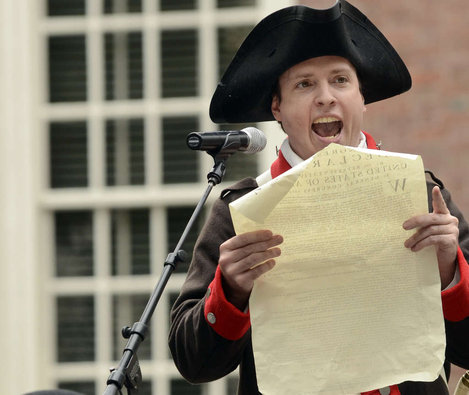
The first reading of the Declaration of Independence is reenacted behind Independence Hall in July.


The first reading of the Declaration of Independence is reenacted behind Independence Hall in July.

Tom Gralish/Staff Photographer


In the aftermath of the election, several hundred thousand citizens have taken advantage of their First Amendment right to petition the government by expressing their desire to leave the Union on a White House website. The colonists of the 18th century, whose Declaration of Independence they invariably quote, had no such recognized right — much less a government-sponsored forum for their complaints. Continue reading “We the oppressed”

Not your father’s presidency

Talking to kids about “growing up to be president” 40 years after Watergate.

Phladelphia Inquirer – October 4, 2012

“Mothers all want their sons to grow up to be president, but they don’t want them to become politicians in the process.” The second part of John F. Kennedy’s observation probably still holds true. But does anyone talk to kids these days about growing up to be president?

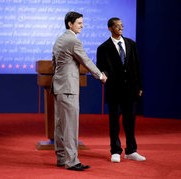
Stand-ins for Mitt Romney and President Obama shake hands during a rehearsal for last night´s debate at the University of Denver.

David Goldman/AP – Stand-ins for Mitt Romney and President Obama shake hands during a rehearsal for the debate at the University of Denver.

PSU figures defy gravity

The Penn State scandal won’t hurt admissions. It might even help.

Philadelphia Inquirer – September 5, 2012

Jerry Sandusky’s arrest and the subsequent firing of coach Joe Paterno and university president Graham B. Spanier last fall must have precipitated some hurried recalculations in the Penn State admissions office.

Most colleges and universities accept more students than they have room for based on educated guesses about the share of those admitted that will actually enroll. Ideally, they end up with the number of students they budgeted for. Too few students, and the college runs at a deficit; too many, and classrooms and dorms overflow.

Generally, the previous year’s figures are the best guide to the next cycle. But in the wake of the Sandusky scandal, who knew what would happen at Penn State?  Continue reading “PSU figures defy gravity”

1812: The war without a name

In its bicentennial year, we should give it a name that conveys some useful information about the conflict.

Philadelphia Inquirer – June 18, 2012

We don’t refer to the Civil War as the “War of 1861” or the Revolutionary War as the “War of 1776.” So what’s with the War of 1812? The name doesn’t even accurately reflect the war’s timing. If you count the Battle of New Orleans, which was fought after the peace treaty was signed, the war lasted until early 1815.

The flag of 1812 and a gathering of tall ships and other vessels in the Norfolk, Va., harbor marked the bicentennial of the War of 1812 last week. STEVE HELBER / Associated Press
The bicentennial of the War of 1812 — which began 200 years ago today — happens to coincide roughly with the sesquicentennial of the Civil War. The latter was known by several names before general usage shifted decisively in favor of “Civil War.” Southerners favored “War Between the States”; Northerners, “War of the Rebellion.” “Civil War” may seem bland in comparison, but at least it makes a clear statement about the nature of the conflict.

The same cannot be said for “War of 1812.” It’s a lousy label, and we should grasp the opportunity offered by the 200th anniversary of the conflict to adopt a better one.  Continue reading “1812: The war without a name”

For city schools, a century of struggle

Reports of the imminent collapse of the Philadelphia school district are exaggerated. It has struggled since it was created and it’s worth considering that history before the next rescue operation is undertaken.

Philadelphia Inquirer – May 15, 2012

Speaking of the Philadelphia School District recently, Mayor Nutter said, “If we don’t take significant action now, the system will collapse.” That “significant action” could include widespread school closings, many more charter schools, and increased local control of the remaining district schools. Continue reading “For city schools, a century of struggle”

The president’s palace guard

Nineteenth century Americans would be horrified to see that the president of United States now lives surrounded by armed guards, bulletproof glass and surface-to-air missiles. They hoped that a chief executive elected by the people would not need protection from his fellow citizens.

Philadelphia Inquirer – April 4, 2012

Mitt Romney has been dubbed “Javelin”; Rick Santorum, “Petrus.” It’s an election year, and Secret Service agents are guarding another set of candidates. The lighthearted news coverage of this development has focused on such tidbits as the current and historic code-names: Truman was referred to as “General,” Reagan as “Rawhide.” The rest of the first family’s code-names, we are told, usually begin with the same letter as the president’s: Those of Reagan’s children included “Radiance” and “Riddler.”

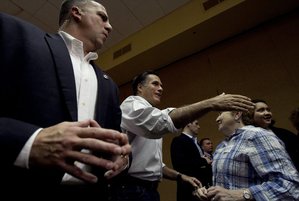
A Secret Service agent watches as presidential candidate Mitt Romney greets people at a campaign event in Madison, Wis., this week. STEVEN SENNE/ Associated Press

A Secret Service agent watches as presidential candidate Mitt Romney greets people at a campaign event in Madison, Wis., this week. STEVEN SENNE/ Associated Press

Although we hire the president and we can fire him, he and his family also function as our “royals.” We are endlessly fascinated by their personal lives and other goings-on in the White House. The Secret Service not only plays a central role in this pageant; the agency encourages it. The more carefully the president’s moves are choreographed, the easier it is to keep an eye on him. Continue reading “The president’s palace guard”
Big-tent politics of yesteryear

In this presidential election year at the sesquicentennial of the Civil War, it’s worth looking back to the master of “big tent” politics, Abraham Lincoln.

Philadelphia Inquirer – March 9, 2012

Mitt Romney’s travails in the Republican primaries and President Obama’s constant sparring with Congress have helped my students appreciate how hard it is to stick to your guns if you’re trying to lead either of the two main political parties. Succeeding at “big tent” politics requires a sense of timing and flexibility. Some may call the latter “flip-flopping,” but only when their opponents do it.

Caucus-goers in Boise, Idaho. Mitt Romney won there and in five other states this week as the struggle within the GOP’s “big tent” continued. Continue reading “Big-tent politics of yesteryear”

Colleges adapt to marketplace

Despite the presence of price tags in the neighborhood of $60,000 per year, competition is alive and well in the world of higher education.

Philadelphia Inquirer – February 1, 2012

In January and February, a number of colleges send e-mail to counselors with headings such as “Scholarships still available at – University” and “We’ve extended our deadline.” The schools generating these notices are well-established, often ones our students have attended over the years. It’s not that they can’t fill seats. They’re hoping to attract well-qualified applicants who may have gotten a late start on the application process or been disappointed in the early fall rounds. Continue reading “Colleges adapt to marketplace”

Gridlock is good: Washington paralysis only mirrors our own

Americans love to sound off about the shortcomings of our government. Thanks to the First Amendment, we’re allowed to. We have a right to air our opinions and to criticize the system. We don’t have a right to to get what we want. And that’s a good thing.

Philadelphia Inquirer – August 8, 2011

Americans love to sound off about the shortcomings of our government. Thanks to the First Amendment, we’re allowed to. We have the right to air our opinions and to criticize the system. We don’t have the right to get results. And that’s a good thing.

When legislative attempts to solve problems go nowhere, many of us pull at our hair, call Washington dysfunctional, and bemoan the lack of “political will.” But that’s the beauty of checks and balances. We live in a huge, heterogeneous republic. We don’t get exactly what we want, and neither do they, whoever “they” may be. Continue reading “Gridlock is good: Washington paralysis only mirrors our own”

A revisionist view on history tests

An Inquirer article reported that only 13 percent of the high school seniors who took the National Assessment of Educational Progress in history “showed a solid grasp of the subject.” Okay, but who decides what constitutes a “solid grasp”?

Philadelphia Inquirer, July 20, 2011

The recently released findings of the 2010 National Assessment of Educational Progress provided another opportunity for the usual hand-wringing about how little American kids know about American history these days. An Inquirer article reported that only 13 percent of the high school seniors who took the test “showed a solid grasp of the subject.”

Sounds dismal. But before we give up on this generation, we should ask ourselves a few questions. Continue reading “A revisionist view on history tests”