East Berliners had their advantages as well as their troubles. Now, they have ours.
a version of this article appeared in The Philadelphia Inquirer, November 12th, 2009
Nineteen years ago the most unusual birthday card I have ever received arrived by airmail (not e-mail). On the front was a photograph of a 20-foot section of the Berlin Wall, taken just hours before the bulldozers arrived to knock it down.
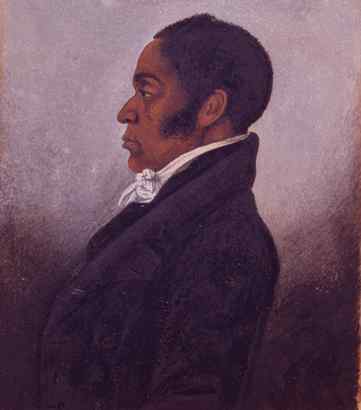
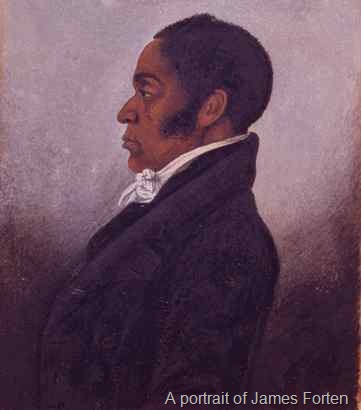
James Forten – anti-slavery activist and Philadelphia businessman
Philadelphia’s past was populated by many fascinating characters, but most of us are stumped after the first two.
Philadelphia Inquirer – September 1st, 2009
I sometimes begin the first history class of the new school year by asking my students to name a few famous Philadelphians from the 18th and 19th centuries. The question doesn’t seem too hard, and they happily give it a go.
The juniors in our American History course were studying the Constitution in the fall of 2008 as the Presidential race reached its final stages.
Published in Independent Teacher, Volume 6, Issue 2 – May 2009
by Grant Calder
We have found that our history courses hold together better if there are a few clear centerpieces. These can be themes such as “revolutions,” the Industrial, the scientific, and the French, for example, or they can be documents such as the Constitution. We also keep alert for opportunities to tie the historical material to contemporary topics.
The conflict is between individual safety and upholding American values.
Philadelphia Inquirer – May 6th, 2009
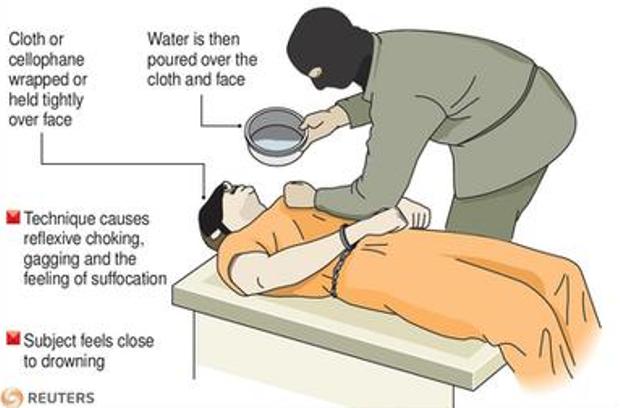
A “former senior CIA official” said in a recent interview that protecting American lives is the president’s most important job. If harsh interrogation techniques achieved that goal, he said, then they were justified. By abandoning these techniques, he added, President Obama is putting his “ideology” before the safety of our citizens.
Prohibition and the current debate over the legalization of drugs and the death penalty
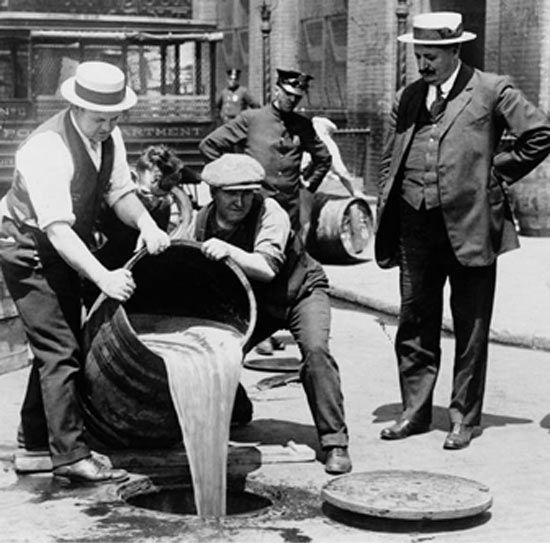
Dumping bootleg beer during ProhibitionAn economic downturn changed our values before. And it likely will again.
Philadelphia Inquirer – April 13th, 2009
My students and I were recently discussing Prohibition in our American-history class. The 18th Amendment, ratified in 1919, outlawed the manufacture, sale, transportation, export, and import of “intoxicating liquors.” It remained in force for 15 years.
The students have studied the Constitution in detail, and they know how hard it is to modify it. They wondered how a movement with such broad support that it led to a constitutional amendment could be swept away only a decade and a half later.
One of the students culled articles mentioning Prohibition from newspaper archives of the late Twenties. The articles reported increasingly critical comments about the policy. The most common complaint seemed to be that it simply did not work. People kept on drinking. And, in a perfect illustration of the law of unintended consequences, it spurred a tremendous expansion of organized crime.
But the students were surprised to find out that what eventually made the repeal of Prohibition possible was not just its complete failure to produce the happier, healthier, better-behaved society its progressive supporters had envisioned. It was the Depression.
The United States was in the middle of the worst economic crisis in its history. The government needed money, and Congress could not afford to pass up the tax revenue that the legal sale of alcohol would generate. The 18th Amendment was repealed by the 21st Amendment in December 1933, less than a year into Franklin D. Roosevelt’s first term.
This led the students to another important insight: What they had thought were essentially moral arguments could quite rapidly become economic ones. We turned to the current reporting on the debate over the “war on drugs” and legalization. The anecdotal evidence suggested a noticeable recent increase in the number of mentions of these topics in newspaper articles and editorials, including an op-ed piece they read in The Inquirer this month, headlined “‘War on Drugs’ seems lost.”
The students were particularly struck by the fact that one of the questions asked of President Obama in a recent online Q-and-A session concerned whether legalizing marijuana would have a positive impact on the economy. In particular, they noticed that the question was phrased in economic terms. The argument is shifting from the moral to the fiscal, just as it did in the 1930s.
I presented the students with another recent article on what they initially assumed was an unrelated topic: the death penalty. For the last several years, the capital-punishment debate has centered on DNA evidence revealing that a disturbingly large number of death-row inmates had been wrongly convicted.
The argument of death-penalty opponents was moral: How could we justify maintaining a system that we knew was taking innocent lives? This argument had persuaded many to reconsider the death penalty. But discussions about ending capital punishment in some states have become much more serious in recent months. Why? Because the economic argument has suddenly taken center stage.
Studies have long shown that it is more expensive to administer the death penalty than it is to keep prisoners incarcerated for life. And states, faced with shrinking tax bases, are desperate to cut costs. The economic crisis of the moment is leading us to reconsider some of our priorities, and this phenomenon cuts across political philosophies and party lines. Many (though far from all) who want to abolish the death penalty would describe themselves as liberals. Interestingly, the economic argument may end up drawing more conservative support for this cause. On the other hand, some of the most thoughtful opponents of the “war on drugs” are conservatives. Here, the economic argument may convince more liberals. Just as in the 1930s, my students have noticed, modern debates across the political and social spectrum are being significantly reshaped by the economy.
the impact of the economic downturn on college admissions in the spring of 2009
Philadelphia Inquirer – February 5th, 2009
In the college counseling office at my school, we sometimes, I imagine, feel the way stock traders do these days. The numbers we keep track of also have been affected by the subprime meltdown and credit freeze. But drops in the number of college applications are not our problem; they are going up, especially at public universities.
an historical perspective on congressional debate over “the bailout”
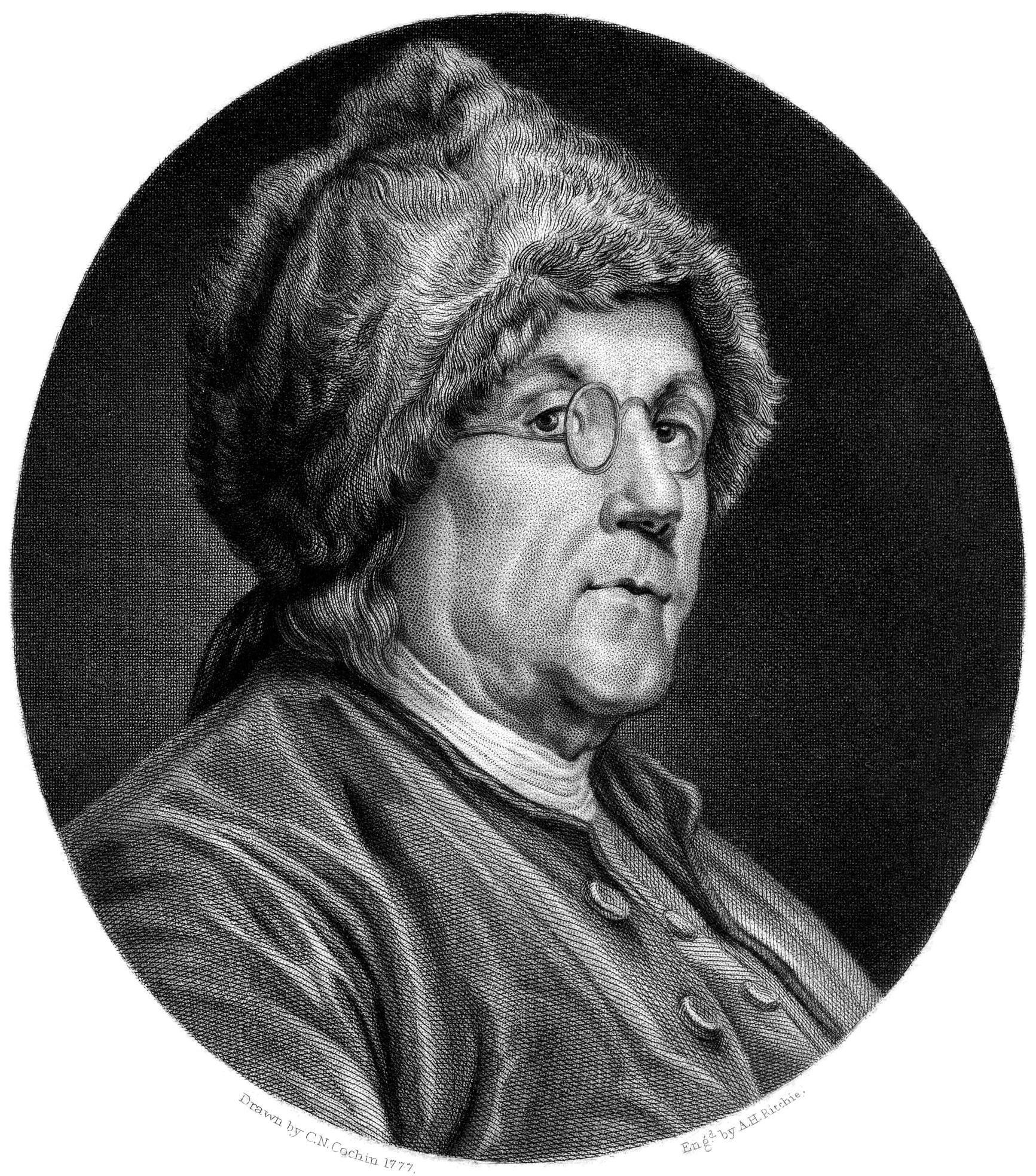
Benjamin Franklin noted that.
A German of the time has other lessons for Pa. Today.
Philadelphia Inquirer – October 17th, 2009
In the mid-1700s a German named Gottlieb Mittelberger settled in Pennsylvania. After only a few years here, he returned to Germany and wrote a book about his experiences and impressions. By and large they were not happy ones and his intent was to discourage his fellow countrymen from emigrating to the colonies. “How wretchedly so many thousand German families have fared,” he wrote. Many “die miserably and are thrown into the water” during “the long and tedious journey” to the New World. Those who survive the crossing often endure “great poverty.” Families are often forced to “separate and are sold far away from each other,” as indentured servants, to pay the cost of their trip.
applying to colleges in the spring of 2008, pre-downturn
Philadelphia Inquirer – March, 2008
“It’s a Great Time to Be Applying to College!” apparently isn’t the kind of headline that captures readers’ attention, although it is true. The annual batch of articles appearing these days in the popular press on the topic of college admissions is much more likely to contain titles such as “Top Colleges Reject 90% of Their Applicants!” For the most part they focus on the staggering numbers of applications some colleges are receiving, the steadily climbing GPAs and standardized test scores of their applicants and the stories of the insane lengths to which students, and often their parents, will go to in order to improve their standings in the pools. The latter may include, for example, paying a consultant as much as it costs to attend an expensive private college for an entire year. The statistics may be accurate as far as they go but they mask some much more important points.


![ProhibitionLiquor[1]](http://blogs.friendscentral.org/gcalder/files/2009/04/ProhibitionLiquor1-300x296.jpg)